Massachusetts

Massachusetts SMART Solar Program Coming In 2018

Massachusetts will soon be embarking on its next and newest solar incentive program, with the aim of continuing the cost-effective development of solar energy in the Commonwealth. Massachusetts has long been New England’s leader in solar installations per year and total installed capacity. The new program, known as the Solar Massachusetts Renewable Target, or SMART, is currently being finalized through processes at the Massachusetts Department of Energy Resources (DOER) and the Massachusetts Department of Public Utilities (DPU).

The purpose of the SMART Program, filed as DOER regulation 225 CMR 20.00, is to encourage the continued development of residential, commercial, governmental and industrial solar units. The growth of these units would not only reduce peak energy demand, and system losses, but it also has the potential to increase grid reliability, along with producing a rise in investment towards new renewable infrastructure. Furthermore, generating more energy from renewables helps contribute to the Commonwealth’s goals to protect the environment by reducing emissions.

As opposed to Solar Renewable Energy Certificates (SRECs), which fluctuate based on market conditions, the SMART program is designed to provide more long-term revenue certainty. Over time, new projects that enter the program would enter with lower incentives to reflect the declining cost of solar. The program is intended to provide solar facilities with a single compensation rate that reflects both the energy value and the incentive value. This is different than that of the SREC program, where SRECs are an independent stream of revenue, separate from the actual value of the energy. Therefore, total costs of the SMART Program can be tracked with greater precision and accuracy.

The SMART Program is designed as a 1600 MW declining block program, spanning eight blocks, each containing 200 MW, with base compensation rates decreasing 4% for projects that begin in each successive block.

For current owners of residential and commercial solar, already in the SREC I or SREC II program, nothing will change for them once the shift from the SREC program to the SMART program is initiated, as they will continue to earn SRECs for the remainder of their term. However, new solar owners, not captured by the SREC II extension will be able to participate in the SMART program instead.

Overall, DOER expects the program as designed to support approximately double the solar capacity currently installed in the Commonwealth. By the end of the SMART program, this would result in almost 10% of Massachusetts electricity consumption being supplied by in-state distributed solar generation.

Suntility is your trusted partner in success. Suntility provides renewable energy maintenance services, net metering credit services, owner’s agent services and consulting solutions to optimize facility reliability, performance and value.

To learn more contact us at 508-538-4Sun

The History Of Massachusetts’ SREC Programs

The first Massachusetts SREC program, referred to as SREC-I, was launched in January 2010 by the Massachusetts Department of Energy Resources (DOER). This SREC program was created as a result of the Green Communities Act of 2008 and the state’s Renewable Portfolio Standard (RPS), which arose out of the restructuring of the electricity industry in the late 1990’s. The SREC program serves as a Massachusetts-specific solar carve-out of the Renewable Energy Certificate (REC) market.

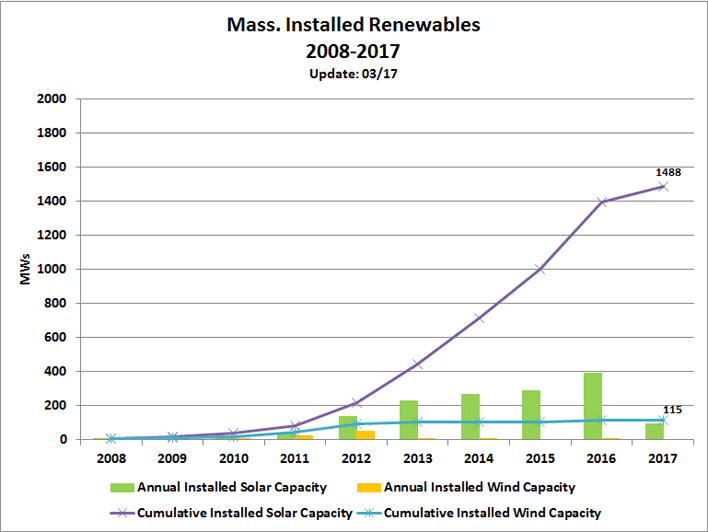
When SREC-I was first established, a capacity limit of 400 MW was put into place. However, this limit was reached early, in the spring of 2013, and the cap was subsequently raised to approximately 650 MW to accommodate transition projects before the commencement of a second SREC program. The DOER then initiated its SREC-II program in spring of 2014 as an incentive mechanism to further encourage Massachusetts to reach its goal of 1,600 MW of new solar installations by 2020.

Image source: Massachusetts Department of Energy Resources

The DOER determines the number of SRECs utilities are required to purchase to meet RPS guidelines based on a compliance formula which is subject to a number of factors including how much solar capacity was installed in the previous years. In the Commonwealth, a solar project receives one SREC for each MWh (1000 kWh) it produces. In the SREC-II program certain project types are ascribed greater or less value for their SRECs depending on locational factors, among others. The market value of an SREC varies based on supply (solar production) and the utility compliance obligation in that particular period.

With the SREC program caps being easily met, and the fact that long-term sustainable solutions take time to deploy, Massachusetts is currently in the process of designing its “Next Generation Incentive Program.” The DOER filed an Emergency Regulation on April 8, 2016 with the Secretary of the Commonwealth’s office to address recent developments in the state’s solar PV market and allow for a transition from the current SREC-II program to the next one. This new solar incentive regime, stemming from a solar law signed by Governor Charlie Baker on April 11, 2016, is expected to begin in mid-to-late 2017.

Overall Massachusetts’ pioneering SREC programs have provided incentives towards creating sustainable solar solutions, promoting cost-effective solar development in the Commonwealth while positioning the state as a national leader in clean energy.

For more stories and articles on Massachusetts SRECs (Solar Renewable Energy Certificates) click here:

https://www.suntilityelectric.com/category/srecs/

Electric Vehicles & Solar, A Powerful Combination

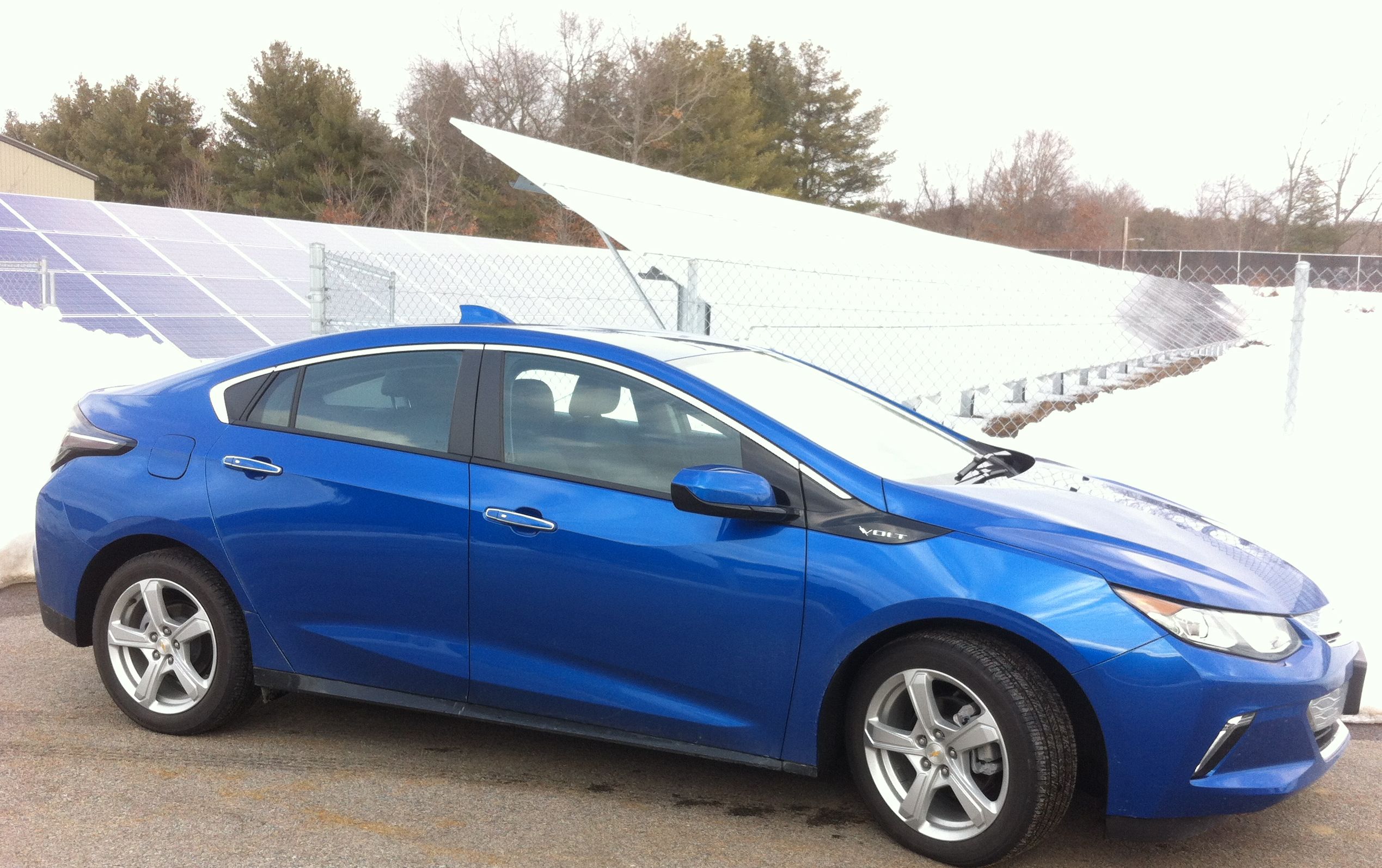
A Suntility plug-in hybrid electric vehicle for solar operations and maintenance.

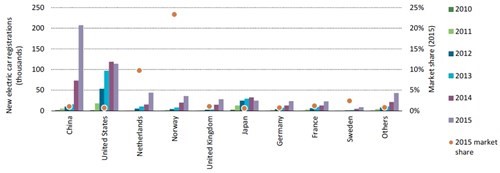
As solar rapidly becomes more common, electric vehicles are becoming more common as well. The electric vehicle (EV) and hybrid electric vehicle (HEV) market grew 70% from 2014 to 2015 globally with 550,000 electric and hybrid cars sold worldwide in 2015 alone according to the International Energy Agency (IEA). 100,000 of those were in the U.S., second only to China with 200,000 vehicles (IEA). The market locally in Massachusetts grew by 37% in 2016 for the vehicles (Forbes).

Tax credits, rebates, lower costs of ownership, safety, and driving experience are all major benefits that prospective electric car buyers are factoring in when considering purchasing a new vehicle, especially as electric vehicle options continue to expand.

Electric vehicles and hybrid electric vehicles also play an important role in reducing imports of petroleum. According to the Department of Energy (DOE), in 2014, the United States imported about 27% of the petroleum it consumed, and transportation was responsible for nearly three-quarters of total U.S. petroleum consumption. Switching to electric vehicles therefore reduces the need for foreign oil.

How clean really are these cars? Electric vehicles, while they do have some greenhouse gas emissions associated with their use and manufacture, are significantly cleaner than conventional gasoline engines. For example, based on a 2015 study performed by the Union of Concerned Scientists, battery-electric vehicles have half the life cycle global warming emissions of gasoline vehicles.

Charging infrastructure is a key element to further adoption. Charging stations have been rapidly expanding domestically and internationally, with over 40,000 in the U.S. and an estimated 1.45 million globally according to DOE figures. Many major transportation corridors and public locations host charging stations that are either free or have a nominal fee.

With electric car sales expanding quickly in the U.S., many countries are seeing electric vehicles as a much more significant percentage share of their domestic car sales. For example, Netherlands and Norway have seen electric vehicle sales as a percentage of total sales, well above 7.5% of total sales with the Netherlands percentage of EV sales around 10% and Norway around 25% (IEA). These markets illustrate the burgeoning potential of these vehicles and the commercial opportunities for electric vehicle manufacturers.

U.S., China, and Japan, despite large and growing electric vehicle sales, are only in the early stages of EV technology capturing greater market share. Innovative and established car makers alike are racing to provide the electric vehicles that consumers are demanding and our economies and environment need.

The Basics Of Net Metering Credits In Massachusetts

Net metering credits are an important source of value for solar projects in Massachusetts.

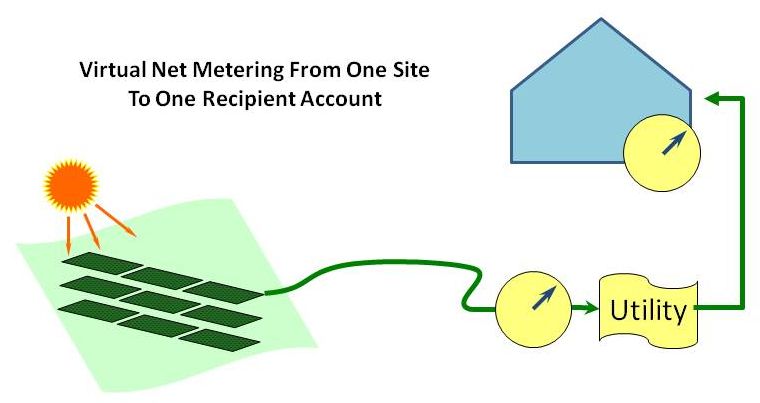
Commercial and utility-scale solar projects very often send net metering credits to be used on other accounts in a process called virtual net metering. Massachusetts is one of many states that allows virtual net metering. Virtual net metering is the ability for one site that generates excess electricity, to send that value, in the form of net metering credits realized on that account’s bill, to another account’s electric bill. These credits provide recipients with meaningful savings on their electric bills, and for the solar project sending them, a steady stream of revenue.

In one basic example, a solar farm site generates electricity far in excess of what that site could use in a month. It designates to the utility to send that excess value (the net metering credits) to the electric account of a building on a separate property in the same utility territory. The credits arrive on the other buildings electric bill and offset what that building would have normally had to pay that month.

net-metering-credits-massachusetts-1

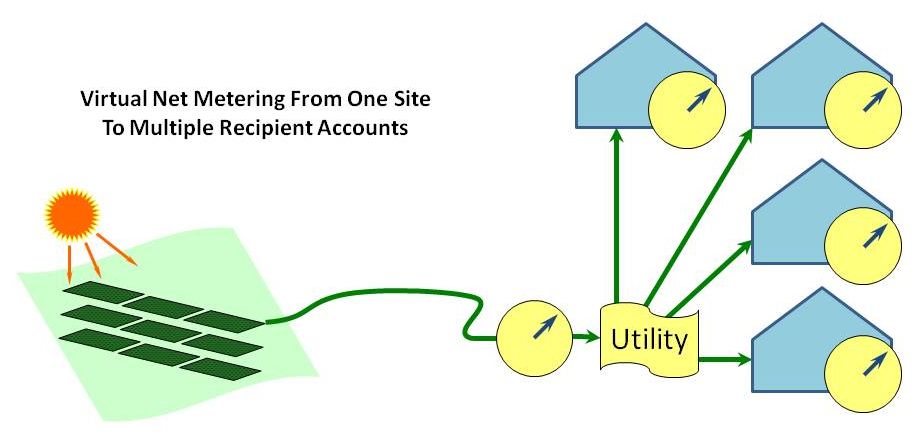
Another example is where the array allocates net metering credits to multiple accounts monthly.

net-metering-credits-massachusetts-multiple

If you own a solar array, or receive net metering credits from a solar array, it is important that you have dedicated professionals ensuring both: 1) the proper amount of net metering credits is being generated; and 2) that the proper value of net metering credits is being received. Hundreds of thousands of dollars up to millions of dollars a year, in net metering credits can be generated by these solar projects. The larger the system, and the more accounts receiving credits, the more critical having a service such as Suntility’s Net Metering Credit Services becomes. Utility and customer mistakes are all too common and proper management and administration helps avoid losing significant value.

Suntility works with many of the largest solar installations in the state servicing hundreds of electric accounts that receive net metering credits. These clients include Fortune 200 energy companies, municipalities, commercial real estate owners, financial institutions and more.

Contact Suntility to learn how your solar project or net metering arrangement can benefit from our expertise in managing Massachusetts net metering credits. Call us at 508-538-4-Sun or contact us through our the website here: www.suntilityelectric.com/contact-us-today-for-a-free-consultation-or-for-more-info/

Suntility Managed Solar Is Better Performing Solar

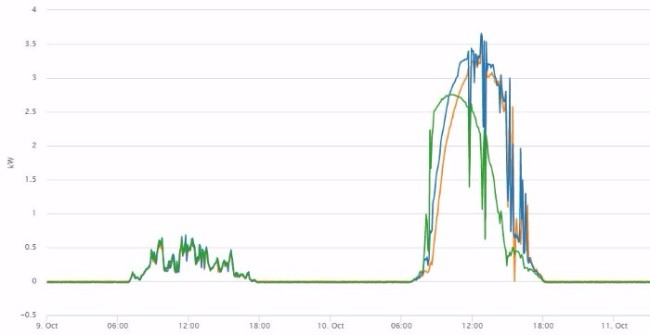
Famous management expert and author Peter Drucker said “You can’t manage what you can’t measure.” Too many commercial solar owners, and those in renewable energy arrangements, aren’t doing either. The cost of ineffective, or absent, management of these systems can easily add up and total in the thousands, tens of thousands, and in some cases hundreds of thousands of dollars a year in lost revenue and savings.

While solar is highly reliable and durable relative to so many other technologies, it isn’t flawless.  Equipment can malfunction and will degrade, there can be interruptions from weather and animals/pests, equipment resets will often be required, inverters may require preventative maintenance or repair, communication devices can fail and grid/site disruptions can also derail solar performance. These are just some of the factors that can negatively impact solar results and ultimately financial returns.

Suntility is dedicated to helping system owners face their most challenging issues and is driving solid outperformance. In a recent study of commercial and utility-scale systems in Massachusetts, solar installations monitored by Suntility professionals performed 6.5% better than those without Suntility’s dedicated monitoring services. Think of what that could mean financially for your system.

Furthermore the revenue streams that these systems produce are also subject to additional administrative processes that are manual and where errors are commonly found including: the allocation of net metering credits by the utilities; as well as with the brokerage of SRECs. Having an industry leading team overseeing these aspects of your project is a must and just as important as the actual solar production itself.

Suntility’s solar management solutions provide the oversight and insights to help ensure that clients are receiving as much value as possible from their clean energy. To learn more about our services check out these links:            

Solar Maintenance Services

Solar Net Metering Credit Services

Solar Consulting Services

Solar Owner’s Agent Services

Suntility is your trusted partner in success. Suntility provides renewable energy maintenance services, net metering credit services, owner’s agent services and consulting solutions to optimize facility reliability, performance and value.
To learn more contact us at 508-566-6322

Four Keys To Success If You’re A Commercial Or Utility-Scale Solar Project Owner

Suntility Commercial Solar 1A

Want a better performing solar array and better solar financials? Learn ways to ensure the proper management of the significant investment you’ve made in solar with these four keys to success.

1 – Monitoring Your System

Many owners wrongly assume that their installation will work flawlessly from commencement, or that if something does go wrong they’ll somehow be alerted. While solar installations are designed to last 25 to 30 years, issues will come up. Being able to recognize those issues early on and respond effectively can be the difference between losing a few hundred dollars of savings and tens of thousands of savings.

That is exactly why active remote monitoring is essential. Only with industry experts monitoring your system and measuring it’s performance relative to other systems in the area can you rest assured that your system is performing as it should. As issues are identified and alerted directly to you, you’ll save significant production value in the process.

2 – Performing Regular Inspections

Many major system issues that cause lost production and expense are entirely avoidable. By performing regular inspections with the right expertise, system owners can ensure better uptime and lower costs of operation long-term. Don’t be penny wise and pound foolish by not investing in the proactive management of your array. Furthermore, regular inspections are viewed favorably by insurance companies as they reduce risk and demonstrate the owners commitment to strong and consistent solar production.

3 – Verifying The Value Of Your Net Metering Credits And Resolving Billing Issues

In states such as Vermont and Massachusetts net metering credits are a critical source of value for solar project owners. However, because of old, arcane, and in many cases manual billing systems, utilities make significant errors when providing these credits to solar projects and their recipient accounts. That is where expert verification comes in. By tracking and analyzing the flow of net metering credits, errors can be identified and resolved to not only ensure full value but to save tens of thousands even hundreds of thousands of dollars of lost revenue and savings.

4 – Understanding You Have Choices When Selling SRECs and RECs

Most solar project owners only believe they have one choice when selling their SRECs or RECs. SREC and REC markets can be all too opaque and working with the right broker can make a huge difference in cash flows. Knowing the right questions to ask, and key qualifications are important when considering this solar project value stream. A solar project owner should be prudent and work with a broker that can offer the best in liquidity, pricing and platform.

Learn how Suntility’s professional solar services can help you and your existing solar array achieve success. Contact us today at 508-538-4-Sun.

Sippican Community Solar Garden® Project receives prestigious 2016 Photovoltaic Project of Distinction Award

The nation’s premier approach to community solar, exhibited with the Sippican Community Solar Garden® Project, receives prestigious 2016 Photovoltaic Project of Distinction Award.

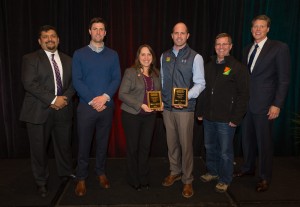
Project-of-Distinction-PV-Boston-2016-300x207The Solar Energy Industries Association (SEIA) and the Solar Electric Power Association (SEPA) presented My Generation Energy and Enphase Energy with the award at the Solar Power PV Conference & Expo – Boston on February 24, 2016.

The Sippican Community Solar Garden Project, 912kW, demonstrates a number of unique design features as well as a one-of-a-kind program approach for the purchasers of the output. The project team consisted of My Generation Energy, Inc. (installation and design) as well as Suntility Electric, LLC (Cooperative setup, enrollment and program management).

To improve the effectiveness of the site in Marion, Massachusetts, and reduce project and on-going costs a new microinverter solution from Enphase, the C250, was paired with high efficiency panels. This high voltage microinverter solution eliminated the need to install site mini-transformers, improves the capacity factor of the installation and reduces future maintenance costs. This solution, with it’s simple cabling, also helped speed the project construction during a winter that featured exceptionally harsh conditions for the Northeast.

The purchasers of the output, in the form of net metering credits, from the project include a Cooperative and a local financial institution. The Sippican Community Solar Garden Cooperative leverages the purchasing power of a large group and aids hundreds of community members in receiving substantial direct savings on their electric bills over ten years. From across 23 towns in Southeastern Massachusetts members of the Cooperative span from low-income, to condo owners, to small businesses, families, faith organizations, non-profits and more.

This Cooperative approach continues the success of a program pioneered in Brewster, Massachusetts, with the Brewster Community Solar Garden Cooperative, which was one of the first community shared solar programs implemented in the nation in 2012. The Brewster project, 346kW, was spearheaded by the same project team as the Sippican project, and has consistently exceeded production expectations and was one of the inspirations for the Community Shared Solar designation in the SREC-2 program in Massachusetts that the Sippican project has achieved. My Generation Energy and Suntility Electric are pursuing additional projects of this nature.

Suntility Client Case Studies – Learn How We’re Helping Our Clients

Suntility™ Client Case Studies
Learn more about how Suntility’s essential services are increasing revenue and generating savings for clients with our leading renewable energy solutions. Two solutions highlighted here include our Net Metering Credit Services and our Maintenance Services for solar energy installations.

Suntility™ Clients

Hyannis Sun Self Storage

Hyannis Sun – Suntility – Case Study

About Hyannis Sun Self Storage – Conveniently located on Communication Way in Hyannis, Hyannis Sun Self Storage has many sizes to accommodate commercial & personal storage. They’re close to Hyannis Airport and offer a free move in truck and sell packing and moving supplies as well. Sun Self Storage facilities span New England, serving numerous communities and all your self storage needs. http://sunselfstorage.com/hyannis.html

JDH Solar & Norfolk Ice Arena

JDH – Suntility – Case Study

About Norfolk Arena – Norfolk Rink Management, Inc. was established in the winter of 1995 and is a family owned business. It is a place to not only “Learn how to skate”, but an activity for the whole family all year long. Check out all of the programs and hours they have to offer. Norfolk Arena is the coolest place in town! http://norfolkarena.com/about_norfolk_arena.html

Press Release – Enphase, Suntility & My Generation Energy Team Up For Sippican Community Solar Garden Project

PETALUMA, Calif., Jun 16, 2015 (BUSINESS WIRE) — Enphase Energy, Inc. and My Generation Energy, Inc., a southeastern Massachusetts-based solar installer and developer, announced today the completion and commissioning of the Sippican Community Solar Garden® in Marion, Mass…

http://www.marketwatch.com/story/enphase-energy-teams-with-my-generation-energy-on-900kw-commercial-solar-installation-2015-06-16

About My Generation Energy, Inc.

My Generation Energy is a Southeastern Massachusetts based installer and developer of solar facilities. In the past five years, My Generation Energy has installed over 4MW of solar power (17,000 panels) including hundreds of residential and small commercial systems in over 20 towns. A significant portion of this portfolio was developed under the Community Solar Garden and Unutility Electric® models for local-investor-owned projects. My Generation Energy has established a track record for on-time management with flawless inspections. www.mygenerationenergy.com

About Suntility Electric, LLC

Suntility’s experience on renewable energy projects spans over 200 systems across Massachusetts providing a range of management services for solar and wind facilities to maximize production and expand the community benefits of these clean energy sources. Suntility’s renewable energy management clients include community shared solar organizations, nonprofits, local business owners, finance organizations, commercial real estate investors, industrial property owners, municipalities, homeowners and more. www.suntilityelectric.com

About Enphase Energy, Inc.

Enphase Energy delivers energy management technology for the solar industry that increases energy production, simplifies design and installation, improves system uptime and reliability, reduces fire safety risk and provides a platform for intelligent energy management. Its semiconductor-based microinverter system converts energy at the individual solar module level and brings a system-based high-technology approach to solar energy generation, storage, control and management. For more information, visit www.enphase.com.

Press Release – The Sippican Community Solar Garden is Set to Power Up in a Matter of Weeks

– Press Information –

FOR IMMEDIATE RELEASE
March 22, 2015

Contact: Michael Stone, Suntility Electric, LLC
(508)566-6322; michael@suntilityelectric.com
(508)538-4-Sun – www.SippicanCommunitySolarGarden.com

The Sippican Community Solar Garden® is
Set to Power Up in a Matter of Weeks
Cooperative Enrollment Deadline Set for April 10th at 5:00 p.m.

Photo: Eversource linemen make the final connections between the Sippican Community Solar Garden project in Marion, MA and the local grid

Photo: Eversource linemen make the final connections between the Sippican Community Solar Garden project in Marion, MA and the local grid

The Sippican Community Solar Garden project construction is all coming together. The utility has installed its new poles and wires to connect the site to their service. The transformer and main electrical components will be in place and connected on April 7th. The solar panel array installation will be complete on April 10th. With the subsequent inspections by the local and utility officials to be completed shortly thereafter, the system is on schedule to begin producing clean energy before the end of April.

“Despite the poor weather conditions…we are pleased with the remarkable progress made this winter; a true testament to the strength, experience and focus of our entire team.” – Luke Hinkle, Manager Suntility, LLC, Founder My Generation Energy, Inc.

The Sippican Community Solar Garden® Cooperative has also seen dramatic growth. At its current rate of growth the Cooperative will be filled within weeks–well before the last panel is installed on April 10th. Between the list of those requesting the Cooperative to reserve them spots (SunRights™) and those already signed up, the total exceeds the number of SunRights™ available.

Therefore, today, the Cooperative is announcing an enrollment deadline of April 10th at 5:00 pm. Those missing the deadline may very likely be relegated to the waiting list.

Those interested in joining should contact the Cooperative at 508-538-4Sun or go to the Cooperative website, www.SippicanCommunitySolarGarden.com.

Sippican Community Solar Garden Facts

SunRights Available: 160 Total
– A Limited Number Remain & Are Going On A First-Come First-Served Basis

SunRight Price: $5,000

SunRight Estimated Average Monthly Value At Current Rates : $67.50

SunRight Estimated Total Value Received At 10 Years At Current Rates: $8,000

SunRight Net Metering Value Guarantee: $7,200

SunRight & Membership Term: 10-years

Who Can Join: Eversource Electric Account Holders In Southeastern Massachusetts
– The Cooperative Includes Members from Over 18 Towns

Project Location: Marion, MA

Anticipated Project Commissioning: April 2015

Project Size: Over 900 kW (Approx. 3,000 Solar Panels)

Anticipated Annual Electricity Production: 1,265,000 kWh
– Enough To Power Over 180 Massachusetts Homes

System Design & Installation: My Generation Energy, Inc.

On-going Maintenance & Monitoring Providers: My Generation Energy & Suntility Electric

Sippican Community Solar Garden Management: Suntility Electric, LLC

About My Generation Energy, Inc.
My Generation Energy is a Southeastern Massachusetts based installer and developer of solar facilities. In the past five years, My Generation Energy has installed over 4 MW of solar power (17,000 panels) including hundreds of residential and small commercial systems in over 20 towns. A significant portion of this portfolio was developed under the Community Solar Garden and Unutility Electric® models for local-investor-owned projects. My Generation Energy has established a track record for on-time management with flawless inspections.

About Suntility Electric, LLC
Suntility’s experience on renewable energy projects spans nearly 200 systems across Massachusetts providing a range of management services for solar and wind facilities to maximize production and expand the community benefits of these clean energy sources. Suntility’s renewable energy management clients include community shared solar organizations, non-profits, local business owners, finance organizations, commercial real estate investors, industrial property owners, municipalities, homeowners and more.

– ### –

Those interested in participating in the Sippican Community Solar Garden should call 508-538-4-SUN. Updates can also be followed on www.SippicanCommunitySolarGarden.com.